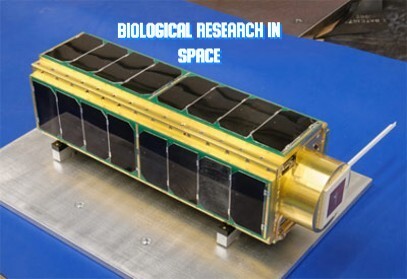
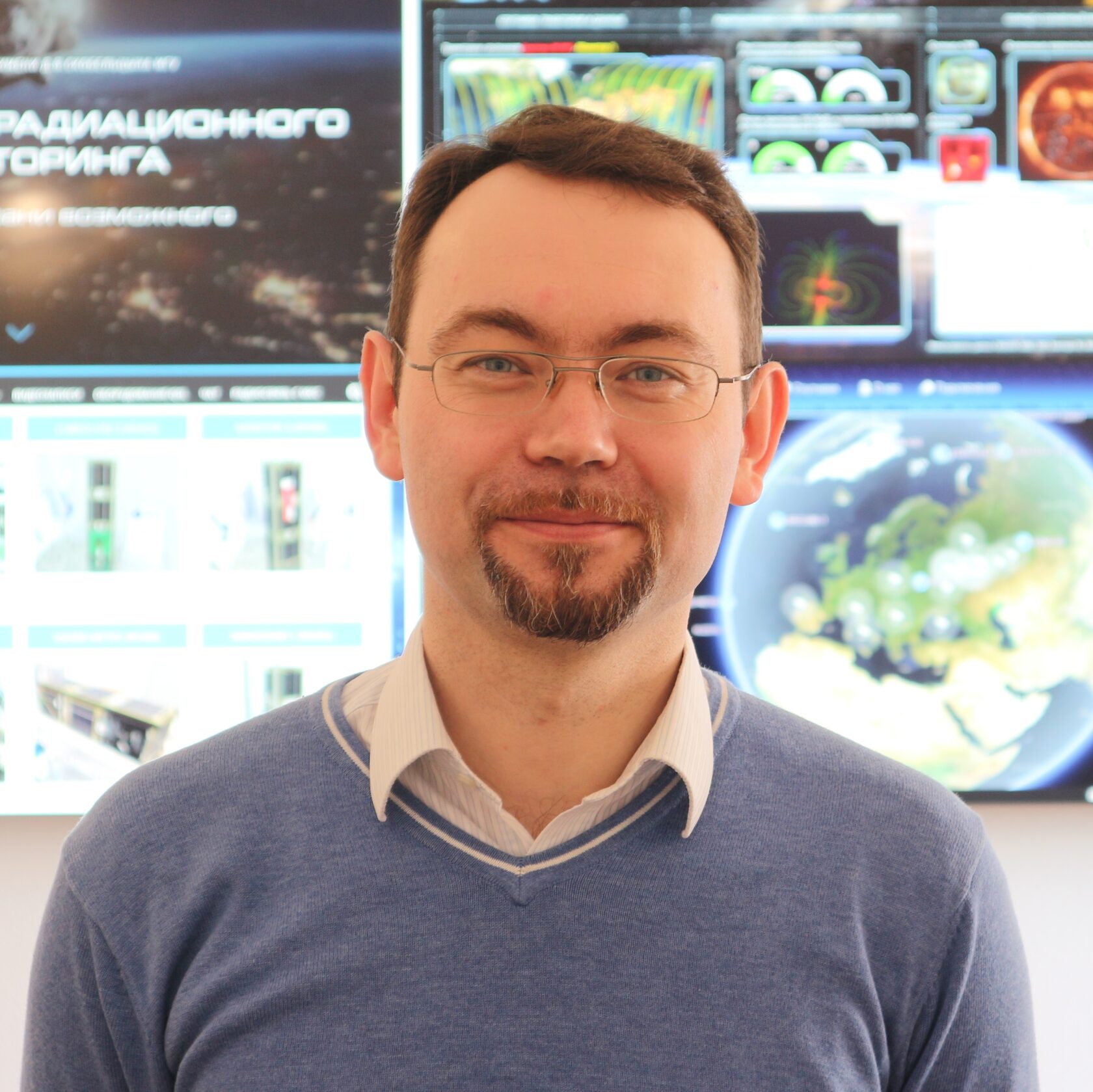
🛰️ At the XXI Annual Conference "Physics of Plasmas in the Solar System," held at the Space Research Institute of the Russian Academy of Sciences (IKI RAS), a staff member of our laboratory, Ivan Zolotarev, presented a report on the implementation and first results of the "BIOL-2" experiment.
The experimental work was carried out on board the small spacecraft "SCORPION" (SINP MSU-80), which was launched on December 28, 2025.
The experimental work was carried out on board the small spacecraft "SCORPION" (SINP MSU-80), which was launched on December 28, 2025.
🎯 Experiment Objectives
The "BIOL-2" project (Biological Orbital Laboratory-2) aims to create a satellite-based laboratory for studying the dynamics of the physiological state of microorganisms under real spaceflight conditions. The objects are housed in sealed capsules, and their vital activity is analyzed through fluorescent glow. The device allows for irradiating samples in the UV, visible, and IR ranges, as well as recording their response luminescence.
🧪🔬 Scientific Payload and Research Objects
Two strains of Escherichia coli (E. coli) XL1-Blue have been selected as the research objects:
1️⃣A strain expressing autonomous bioluminescence (wavelength 520 nm).
2️⃣A strain expressing the green fluorescent protein eGFP (excitation 488 nm, emission 507 nm).
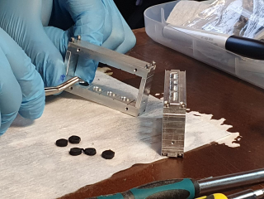
3️⃣TThe "BIOL-2" device, designed and assembled with the active participation of schoolchildren and students, includes sealed capsules with samples, an LED illumination system (430 nm), an 8-channel signal amplification system from photodiodes, a digital unit based on an Stm32l496 microcontroller, and a Camera Module 3 NoIR based on a Raspberry Zero 2W.
The "BIOL-2" project (Biological Orbital Laboratory-2) aims to create a satellite-based laboratory for studying the dynamics of the physiological state of microorganisms under real spaceflight conditions. The objects are housed in sealed capsules, and their vital activity is analyzed through fluorescent glow. The device allows for irradiating samples in the UV, visible, and IR ranges, as well as recording their response luminescence.
🧪🔬 Scientific Payload and Research Objects
Two strains of Escherichia coli (E. coli) XL1-Blue have been selected as the research objects:
1️⃣A strain expressing autonomous bioluminescence (wavelength 520 nm).
2️⃣A strain expressing the green fluorescent protein eGFP (excitation 488 nm, emission 507 nm).
3️⃣TThe "BIOL-2" device, designed and assembled with the active participation of schoolchildren and students, includes sealed capsules with samples, an LED illumination system (430 nm), an 8-channel signal amplification system from photodiodes, a digital unit based on an Stm32l496 microcontroller, and a Camera Module 3 NoIR based on a Raspberry Zero 2W.
📊 First Results from Orbit
As Ivan Zolotarev noted in his report, during flight tests on January 15, 16, and 18, 2026, the first data from the BIOL-2 instrument were obtained. Arrays of telemetry and scientific information were recorded, including measurements of the microorganisms' luminescence. Data from the camera confirmed the operability of the Raspberry Pi and the module itself. The instrument is currently functioning nominally, and adjustments are being made to the operating modes to obtain high-quality images of the ampoules.
As Ivan Zolotarev noted in his report, during flight tests on January 15, 16, and 18, 2026, the first data from the BIOL-2 instrument were obtained. Arrays of telemetry and scientific information were recorded, including measurements of the microorganisms' luminescence. Data from the camera confirmed the operability of the Raspberry Pi and the module itself. The instrument is currently functioning nominally, and adjustments are being made to the operating modes to obtain high-quality images of the ampoules.
👨🎓👩🎓 Educational Component and the Team
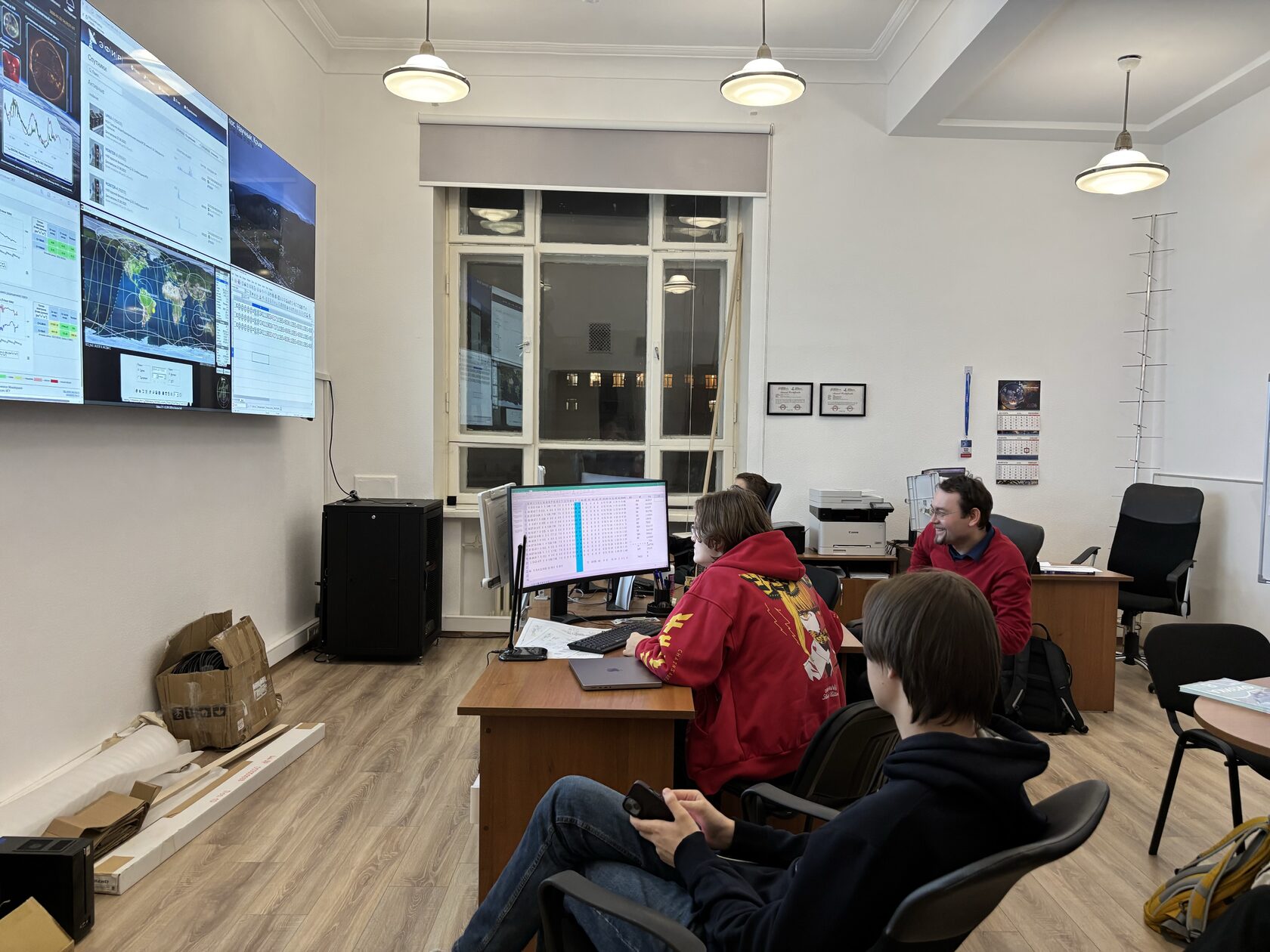
The uniqueness of the project lies in the extensive participation of schoolchildren and students. Students from more than 15 schools and educational institutions took part in the preparation and creation of the instrument mockup, including the MSU University Gymnasium, Letovo School, Intellectual School, Bauman Engineering School No. 1580, and many others. The development team also included students and postgraduates from MSU, MAI, and Pirogov Russian National Research Medical University (RNIMU).
Ivan Zolotarev emphasized that the processing of data coming from orbit is now being handled by the young researchers themselves. The schoolchildren are learning to work with "raw" telemetry, analyze the impact of space environment factors on living organisms, and draw their first independent scientific conclusions.
The project was implemented within the framework of the state assignment of Moscow State University, with support from the MSU Development Program (Project No. 24-Ш01-05), the Space-π scientific and educational project, and the Foundation for Assistance to Small Innovative Enterprises🤝
The uniqueness of the project lies in the extensive participation of schoolchildren and students. Students from more than 15 schools and educational institutions took part in the preparation and creation of the instrument mockup, including the MSU University Gymnasium, Letovo School, Intellectual School, Bauman Engineering School No. 1580, and many others. The development team also included students and postgraduates from MSU, MAI, and Pirogov Russian National Research Medical University (RNIMU).
Ivan Zolotarev emphasized that the processing of data coming from orbit is now being handled by the young researchers themselves. The schoolchildren are learning to work with "raw" telemetry, analyze the impact of space environment factors on living organisms, and draw their first independent scientific conclusions.
The project was implemented within the framework of the state assignment of Moscow State University, with support from the MSU Development Program (Project No. 24-Ш01-05), the Space-π scientific and educational project, and the Foundation for Assistance to Small Innovative Enterprises🤝
