Sixty-eight years ago, on October 4, 1957, the world held its breath. A rocket launched from the Tyura-Tam polygon, carrying into orbit the first human-made object—the legendary Sputnik-1. Its simple "beep-beep" became a symbol of the dawn of a new, cosmic era for all humanity.
We are not merely honoring the past; we are actively building the future by expanding our constellation of student and school satellites. And on this momentous day, we are thrilled to introduce the most "scorching" participant of our upcoming launch—the "Scorpion" satellite from the D.V. Skobeltsyn Institute of Nuclear Physics of Moscow State University (INP MSU).
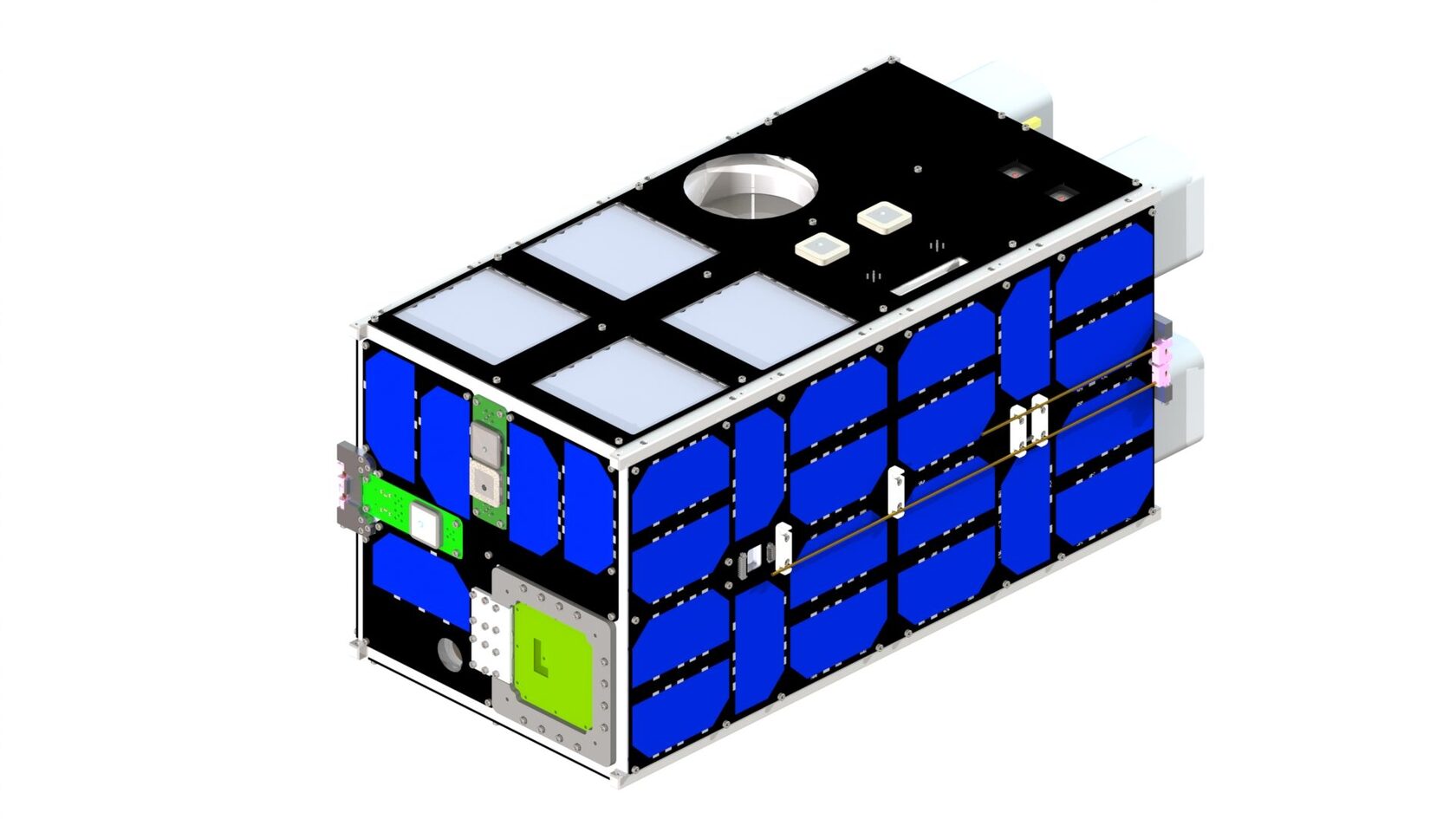
This small spacecraft was designed to study the radiation environment in a polar Sun-synchronous orbit using cosmic radiation detectors developed at the Institute of Skobeltsyn Institute of Nuclear Physics of Moscow State University (SINP MSU).
Despite its compact CubeSat format, the spacecraft conducts comprehensive measurements by combining optical observations with the detection of gamma radiation and charged particles. This enables research into magnetospheric dynamics, the testing of a prototype space weather monitoring system, and astrobiological experiments studying the effects of space on biological systems. The data obtained is a key contribution to creating a dynamic model of the near-Earth radiation environment, and the technologies tested on board have already been incorporated into the educational program for schoollers at the "Sirius" center.
Despite its compact CubeSat format, the spacecraft conducts comprehensive measurements by combining optical observations with the detection of gamma radiation and charged particles. This enables research into magnetospheric dynamics, the testing of a prototype space weather monitoring system, and astrobiological experiments studying the effects of space on biological systems. The data obtained is a key contribution to creating a dynamic model of the near-Earth radiation environment, and the technologies tested on board have already been incorporated into the educational program for schoollers at the "Sirius" center.
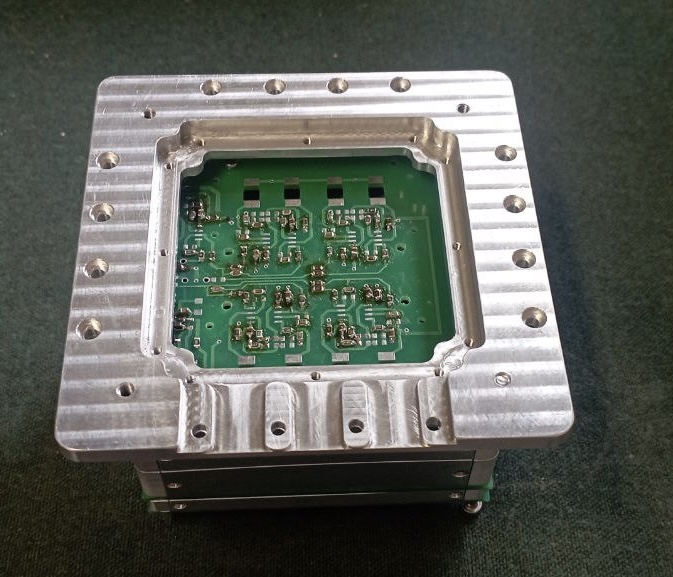
One of the experiments aboard "Scorpion" is the BIOL project—an automated biological laboratory studying the dynamics of the physiological state of microorganisms through their fluorescent glow under spaceflight conditions.
The launch of "Scorpion" represents:
- the MSU Legacy: upholding the tradition of university-level space instrumentation engineering.
- relevant Science: collecting data crucial for planning long-term crewed missions — directly contributing to the 2025 World Space Week theme "Life in Space," held from October 4-10 under UN initiative.
From the first 'Sputnik' to 'Scorpion' – a journey spanning an entire era. Yet the essence remains unchanged: humanity's relentless pursuit of knowledge and the courage to push beyond the boundaries of the possible.
Our heartfelt gratitude to all who made this incredible project possible:
- The scientific-educational project "Constellation-270" under the MSU "Cosmos" Strategic Academic Unit;
- The Space-π scientific-educational project;
- And the Foundation for Assistance to Innovation.
