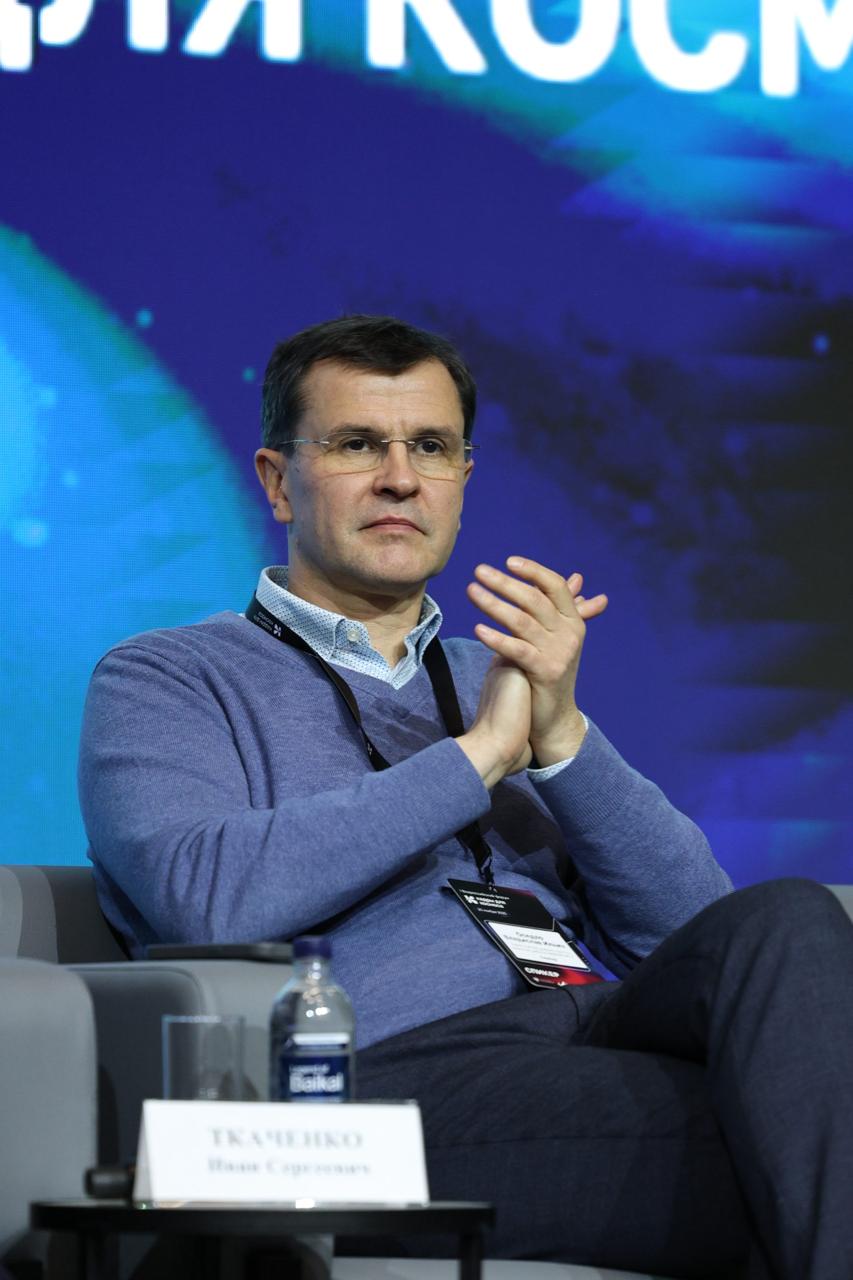
As part of a large-scale forum supported by the federal program "Personnel for Space" of the Russian Ministry of Science and Higher Education, a session on space education was held. The hall was full - students and scientists listened as Russian universities shared how they turn bold ideas into operational orbital vehicles. The session was titled "Successful Cases: How to Launch Your Own Satellite".
A participant in the discussion was Vladislav Osedlo, Deputy Director for Research at SINP MSU and Head of the SINP MSU Radiation Monitoring Laboratory. In his speech, Vladislav Osedlo outlined the common challenges and shared the specific experience of SINP MSU, discussing the large-scale project Constellation-270:
"Lomonosov Moscow State University space activities began in 1957 – the same year space activities began for all of humanity. Since 2005, thanks to the initiative of the MSU Rector, Viktor Antonovich [Sadovnichy], a space program for launching our own satellites has been operational. Constellation-270 is an ambitious project timed for the university's 270th anniversary, aimed at creating Russia's first university cluster of small spacecraft. This cluster is intended for monitoring the radiation environment in near-Earth space, observing gamma-ray bursts in Earth's atmosphere, studying space weather and its effects on Earth, and testing new technologies for small spacecraft."
The project is a powerful tool for training personnel. MSU students and postgraduate students participate in all stages – from designing and assembling the spacecraft to processing and analyzing the data received from orbit.
A participant in the discussion was Vladislav Osedlo, Deputy Director for Research at SINP MSU and Head of the SINP MSU Radiation Monitoring Laboratory. In his speech, Vladislav Osedlo outlined the common challenges and shared the specific experience of SINP MSU, discussing the large-scale project Constellation-270:
"Lomonosov Moscow State University space activities began in 1957 – the same year space activities began for all of humanity. Since 2005, thanks to the initiative of the MSU Rector, Viktor Antonovich [Sadovnichy], a space program for launching our own satellites has been operational. Constellation-270 is an ambitious project timed for the university's 270th anniversary, aimed at creating Russia's first university cluster of small spacecraft. This cluster is intended for monitoring the radiation environment in near-Earth space, observing gamma-ray bursts in Earth's atmosphere, studying space weather and its effects on Earth, and testing new technologies for small spacecraft."
The project is a powerful tool for training personnel. MSU students and postgraduate students participate in all stages – from designing and assembling the spacecraft to processing and analyzing the data received from orbit.
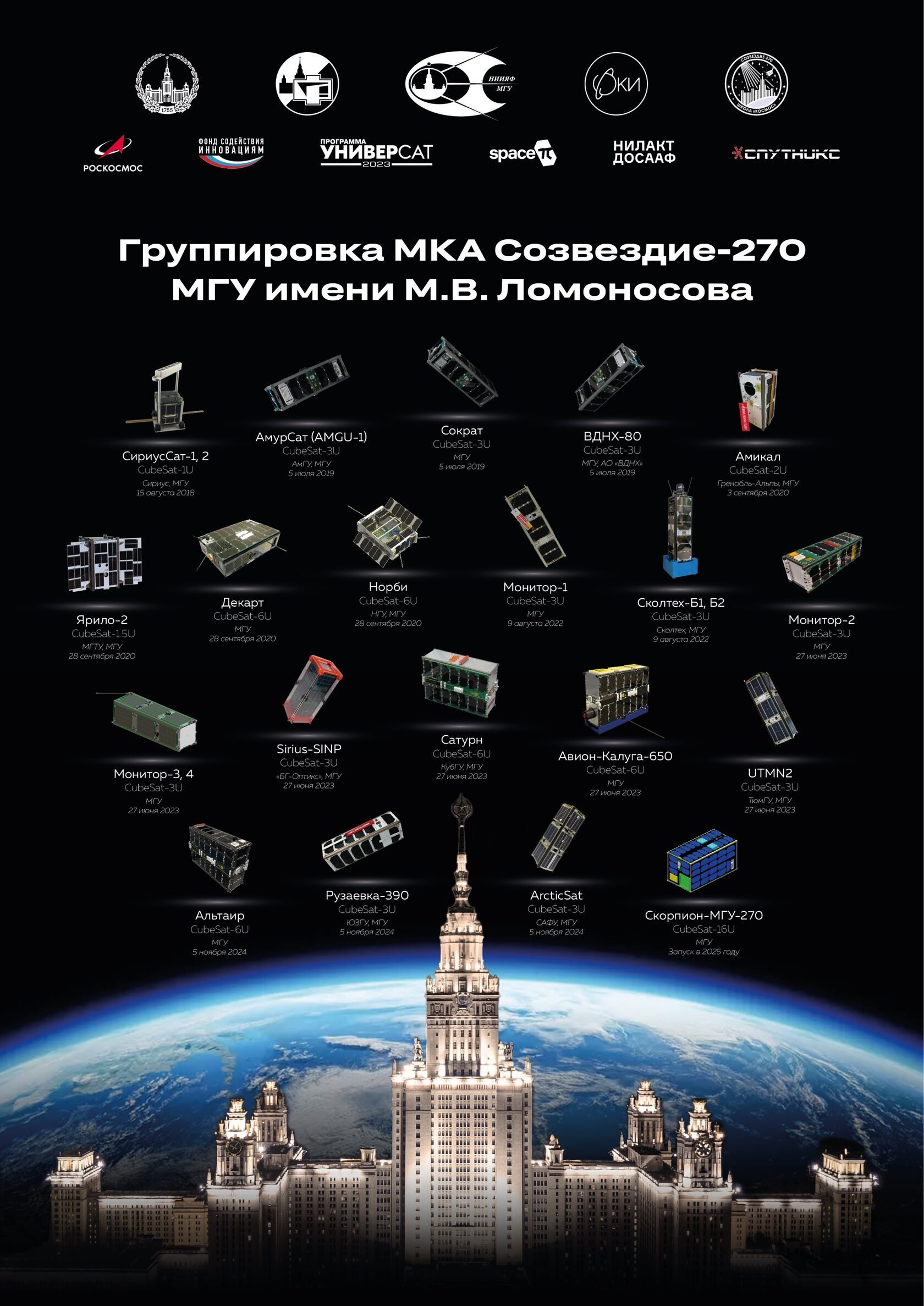
Constellation-270: from Concept to Operational Constellation
Vladislav Osedlo presented the project as a fully functional ecosystem integrating science, education, and engineering.
Scale: To date, the project has successfully deployed over 20 satellites into orbit.
Scientific Achievements: MSU satellites have already demonstrated impressive results. The CubeSats have detected bright gamma-ray bursts also observed by major observatories and recorded the most powerful X9.0-class solar flare.
Infrastructure: A dedicated network of ground stations has been deployed for constellation management and data reception. The Mission Control Center established at SINP MSU, along with 5 operational stations across Russia, ensures daily reception of approximately 5 MB of telemetry and scientific data.
Educational Impact: The project serves as a powerful tool for workforce development. Students and even schoolchildren participate in creating actual instruments like MADIZ and MADIZ-2, which are already installed aboard spacecraft.
Vladislav Osedlo and other experts from leading universities and engineering centers shared unique hands-on experience unavailable in textbooks:
Dream Team Formation: How to build an effective team and properly allocate roles among students, engineers, and research supervisors.
From Blueprint to Hardware: The step-by-step process of building, assembling, and testing spacecraft to withstand rigorous launch conditions and space operations.
Real-World Challenges: Inevitable technical and organizational complexities in such projects and strategies to overcome them.
Partnerships and Approvals: How to establish constructive collaboration with Roscosmos State Corporation and engage industrial partners.
Ultimate Goal: Essential requirements for ensuring a satellite successfully completes its orbital mission rather than remaining merely an educational prototype in the laboratory.
Vladislav Osedlo presented the project as a fully functional ecosystem integrating science, education, and engineering.
Scale: To date, the project has successfully deployed over 20 satellites into orbit.
Scientific Achievements: MSU satellites have already demonstrated impressive results. The CubeSats have detected bright gamma-ray bursts also observed by major observatories and recorded the most powerful X9.0-class solar flare.
Infrastructure: A dedicated network of ground stations has been deployed for constellation management and data reception. The Mission Control Center established at SINP MSU, along with 5 operational stations across Russia, ensures daily reception of approximately 5 MB of telemetry and scientific data.
Educational Impact: The project serves as a powerful tool for workforce development. Students and even schoolchildren participate in creating actual instruments like MADIZ and MADIZ-2, which are already installed aboard spacecraft.
Vladislav Osedlo and other experts from leading universities and engineering centers shared unique hands-on experience unavailable in textbooks:
Dream Team Formation: How to build an effective team and properly allocate roles among students, engineers, and research supervisors.
From Blueprint to Hardware: The step-by-step process of building, assembling, and testing spacecraft to withstand rigorous launch conditions and space operations.
Real-World Challenges: Inevitable technical and organizational complexities in such projects and strategies to overcome them.
Partnerships and Approvals: How to establish constructive collaboration with Roscosmos State Corporation and engage industrial partners.
Ultimate Goal: Essential requirements for ensuring a satellite successfully completes its orbital mission rather than remaining merely an educational prototype in the laboratory.
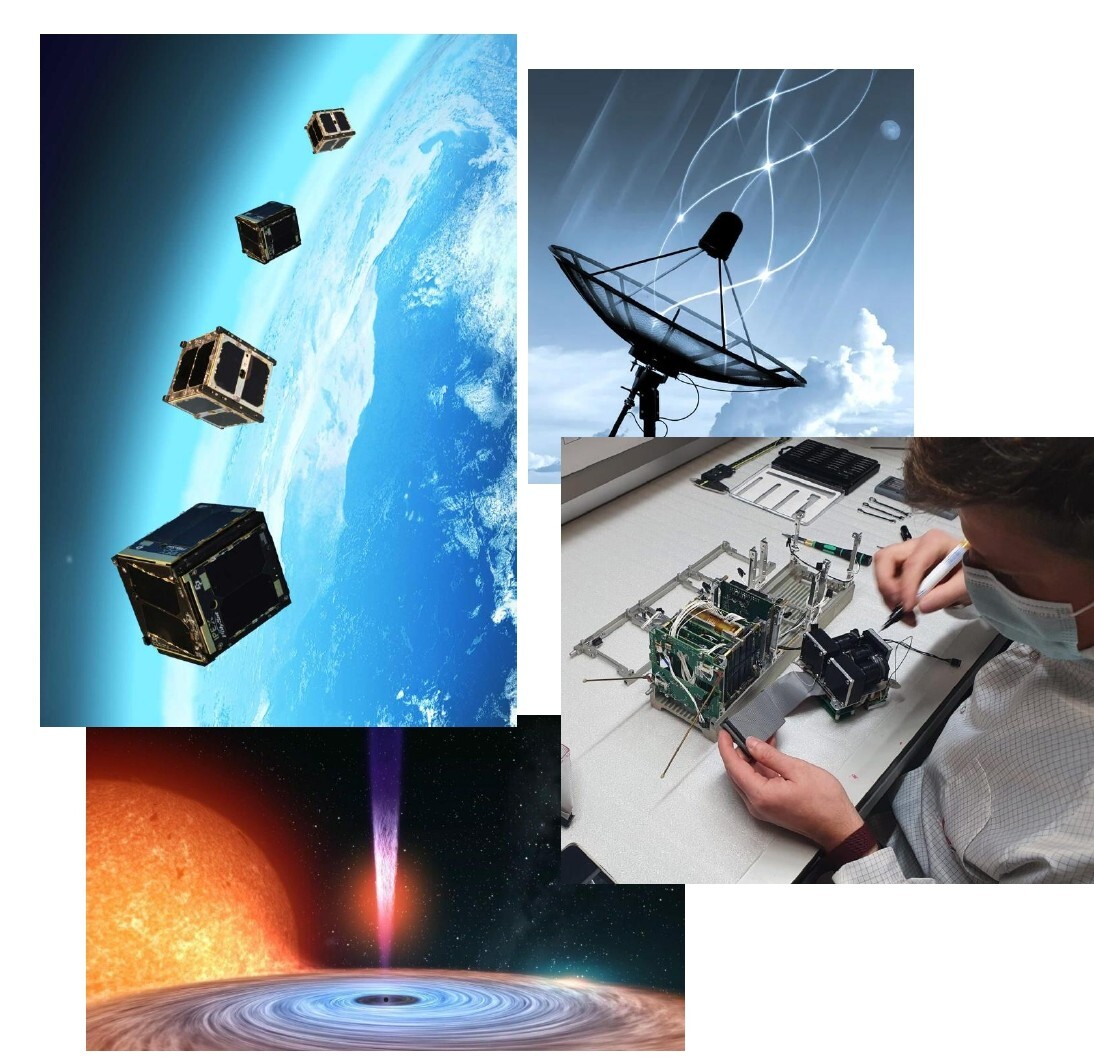
The key conclusion of the session, echoed in every presentation, was clear: launching a student satellite is no longer a distant dream but an absolutely achievable project. Thanks to systematic support within the federal program "Personnel for Space" this path is now accessible to many Russian universities. Comprehensive projects like SINP MSU Constellation-270 vividly demonstrate that universities are capable of not only training specialists but also solving serious scientific tasks of national importance, elevating Russian space instrumentation to a new level.
Vladislav Osedlo: "Launching a satellite is no longer science fiction—it's our daily work. We have journeyed from a dream to an operational orbital constellation. Constellation-270 is not just a collection of satellites. It is a living organism that integrates science, education, and real-world production. Students who were solving theoretical problems yesterday are today operating actual spacecraft."
The Radiation Monitoring Laboratory of SINP MSU, under the leadership of Vladislav Osedlo, takes pride in participating in this strategically vital process for the nation and continues its work in training specialists and implementing advanced space projects.
Vladislav Osedlo: "Launching a satellite is no longer science fiction—it's our daily work. We have journeyed from a dream to an operational orbital constellation. Constellation-270 is not just a collection of satellites. It is a living organism that integrates science, education, and real-world production. Students who were solving theoretical problems yesterday are today operating actual spacecraft."
The Radiation Monitoring Laboratory of SINP MSU, under the leadership of Vladislav Osedlo, takes pride in participating in this strategically vital process for the nation and continues its work in training specialists and implementing advanced space projects.
